
O ur brains represent ourselves, to ourselves, by means of a Phenomenal Self-Model (PSM). According to Thomas Metzinger, the PSM is characterized by transparency, and a phenomenal quality of ‘mineness.’ Its transparency consists in our unawareness of it as a model. We look and act ‘right through it’ – we take our models for our real selves. ‘Mineness’ is a quality that infuses all of our experience which we take to be experience of ourselves. Although Metzinger uses the terms “mineness” and “ownership,” it is more than an experience of ownership. I think “me-ness” aptly captures what Metzinger is after. Continue reading “A Special Form of Darkness: Metzinger on Subjectivity”
Metzinger: Being No One
 Being No One is a substantial work by German philosopher Thomas Metzinger about “consciousness, the phenomenal self, and the first-person perspective.” Its main thesis “is that no such things as selves exist in the world. Nobody ever was or had a self.”
I have spent some time with the book, making, from its 634 densely-printed pages, 104 pages of notes. After all that, I still question Metzinger’s ‘main thesis.’ But I have no doubts about the value of the book. It irrevocably raises the standard for what philosophy of mind must explain. In its early pages, Metzinger echoes Paul Churchland’s complaint, that “theoretical approaches to the mental, still intuitively rooted in folk psychology, have generated very little growth of knowledge in the last twenty-five centuries.” Being No One goes a long way towards burying that era. Continue reading “Metzinger: Being No One”
Rationality and its Limits
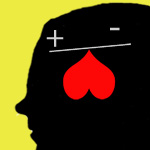 Rationality depends on emotion. A.R. Damasio’s Descartes’ Error – Emotion, Reason and the Human Brain reveals how the human ability to make rational, prudent choices fails unless it is supported by normal emotional responses. His findings fly in the face of conventional wisdom which portrays emotions as enemies to reason – impulsive forces which urge us to make poor choices, and which must be held in check by cool logic and deduction.
Damasio shows that rational behaviour results from a bottom-up process that begins with subconsciously learned emotional responses that can be detected in galvanic skin responses (GSR’s), and other physical signs. This unconscious learning preceeds, and helps to facilitate, cognitive learning.
Moreover, people require these learned emotional responses to make rational, self-interested choices, even after they have cognitively ‘figured out’ what choices are in their interests.
Both results seem counterintuitive, the latter most strikingly. Most people who consider themselves sane think that if they know what is in their best interests, they will choose accordingly. They won’t, says Damasio, unless that knowledge is supported by feeling. Continue reading “Rationality and its Limits”
Human Replication Technology, Update 2010: Replicating the Brain
 Successful replication of a mature human brain – one that we would accept as a replacement for our own, or for the brain of someone we love – must preserve almost all the connections within it. Connections embody the psychological properties that make human individuals who they are: memories, learned abilities, habits, associations, talents, and emotional responses.
In an organ such as the liver, it doesn’t matter that two particular cells are adjacent, because the liver is not a communications network. In the brain, the physical arrangement of individual cells matters very much. All our psychological attributes – the differences between the minds of an Einstein and a Hitler – are instantiated in that physical relationship. Continue reading “Human Replication Technology, Update 2010: Replicating the Brain”
Human Replication Technology, Update 2010: Bioprinting
 My original post on technologies of human replication, a year ago, was mostly about numbers. I estimated that a ‘fair copy’ of a human being, functionally indistinguishable from the original, could be constructed from approximately 1016 bits of information. That’s a petabyte – a lot of data by today’s standards, but not mind-boggling. One petabyte = 1024 terabytes (Tb). The going price for a 1 Tb hard drive today is $70 retail; 1024 of them would cost $71,680 (less with volume discounts). By Moore’s Law, that cost should drop to 0.7 cents by 2056. In that time-frame, other technologies required for human replication will have matured. As I argued, the business case for developing such technologies is compelling. Three business drivers – applications where the economic benefits justify the required R&D – are transportation, health, and life insurance.
Some implications of the transportation and life insurance applications have already been discussed in the Phantom Self blog. Information-based teleportation –human replication as a means of transportation – is a game-changer for the transportation industry, but will not, by itself, turn society upside down. Travelling to Omaha as a stream of data will quite naturally become the usual way of doing business. The use of this technology for life insurance – restoring people from backups, after they have died – is more radical, because it changes our relationship to death. Death will be transformed from the ultimate loss to a temporary setback, like the setback called ‘death’ in a video game.
I haven’t said much about health applications. But in the medium-term future, health care looks like the biggest driver of all. Health care costs in developed nations are escalating towards fiscal crisis. According to the 2007 Commonwealth Study, the United States spends 16% of its GDP on health care – triple the percentage it spent in 1960. The trend shows no signs of abating. Average age in the developed world continues to rise, and annual health care costs increase with the age of the patient.
We need to do things better. An interesting development in health care technology, directly related to human replication, is organ printing. Continue reading “Human Replication Technology, Update 2010: Bioprinting”
Engaging with the Future
 Our investments in the future do not stop paying dividends when we die. Other beneficiaries may cash the cheques, but that does not represent a loss to ourselves, because our connections to them are not fundamentally different from our connections to ourselves during our remainder of our lifetimes. In that way, it’s as though someone else always cashes the cheques.
In practice, this means we need not hold all our future eggs in one basket. We have no reason to invest only in ourselves. It is no less rational to work towards goals that benefit other people, or the non-human world, than it is to work for our own benefit. They may be goals for places far outside our homes, and for times following our personal deaths. We can commit ourselves to goals at future times when there will be no one alive for whom we now feel full-blown self-concern. Like Terry Fox, we can engage with a future in which we will no longer exist. Continue reading “Engaging with the Future”
Death, Revisited
 I am always skeptical of claims that humans are unique. The facts that we use tools, and clothes, and language, have failed to differentiate us from other species. The more we learn about nature, the less well defined seem to be the boundaries between natural domains.
Avoiding sweeping generalizations, I will still say that the human species has gone further than others in some directions, including preoccupation with the future and awareness of death. I doubt my cat Charlie thinks further ahead than his next meal, and not even that far when his belly is full. Charlie lives in the day, and in the hour: he hunts with ferocious intensity, and sleeps soundly afterwards. I, in contrast, devote most of my energy to projects which may not yield results for weeks or years, results which in some cases (like the Phantom Self project) are highly uncertain. Charlie lives mainly in the scene of his immediate experience; I concern myself mainly with the future portrayed in my imagination. Charlie’s experience is, by and large, an accurate representation of the world he lives in; but the future events I imagine are often very different from events in the real future, as it finally turns out.
As early as young adulthood, some people feel a need to plan their entire lives. Our society encourages them: to choose a career path, for example, that will finance a mortgage. Before young people have paid off their student loans, ads exhort them to start saving for retirement. Careful planning for the future is praised as prudent behaviour.
Such prudent planning allowed our ancestors to make the transition from roving bands of hunter-gatherers to settled agrarian societies – a transition that presaged a population explosion and the beginning of human dominance of this planet. Success in farming required thinking about next year. Migration to colder climates would have been impossible without the ability to think things through: to preserve and tan the hides of slaughtered animals with the intention of making clothes and footwear; to collect stones and sods in summer in order to build shelters for the coming winter. Natural selection favoured the species – ours – with the greatest ability to plan for the long term. And so it has continued to this day: our powerful imaginations allow us to coordinate our efforts, invent, design, and build, anticipate potential disasters and sometimes successfully avoid them. Being so preoccupied with our futures leads inevitably to thinking about our deaths. Continue reading “Death, Revisited”
Hazlitt’s Insight

The least pain in our little finger gives us more concern and uneasiness, than the destruction of millions of our fellow-beings. – William Hazlitt
As early as 1796, when he was just eighteen, the English essayist William Hazlitt may have become the first Westerner to see that self-concern is not rationally required.
Hazlitt published his insight in 1805, in his Essays on the Principles of Human Action. Introducing the 1990 edition, John Price informs us that “The reading public and the reviewing journals regarded it, for the most part, with indifference or hostility.” Hazlitt’s Essays and the idea they contain fell into obscurity for the best part of two centuries, after which the idea re-emerged independently as part of a new wave of thought about personal identity Continue reading “Hazlitt’s Insight”
The Neurology of Anticipation
 In the previous post, I asked what is the difference between having a painful experience myself and feeling sympathy for someone else’s pain. The answer seems pretty clear. My experience of my own pain is neurologically ‘hard-wired’, but there is no direct neural connection between other persons and myself which exposes me to their pain. Things could have been different. If we, like the Na’vi of the movie Avatar, had the physiological equivalent of USB-ports which allowed us to connect our nervous systems at will, then we could experience the pains, pleasures, and other sensations of other people while we were connected to them. The ‘privacy’ of our minds is an anatomical limitation, not a metaphysical necessity.
A parallel question can be asked about future experience. What is the difference between anticipating my own pain and having sympathy for a friend whose pain I can foresee? As in the case of present pain, there is a vivid difference in my experience between anticipating having pain, and expecting you to have pain. There is nothing resembling a direct neural connection between myself, now, and myself in the future, to explain this difference. Nevertheless, neuroscience can help us understand it: why it is so vivid, why expectation of my own pain makes me anxious rather than just sympathetically concerned, why foreseeing pain in my own future feels like an unavoidable problem for me in a way that foreseeing your pain does not.
Another difference is that sympathy for others, unlike self-concern, seems at least partially under conscious control. When we feel we cannot afford it, we tend to dial it down or switch it off altogether. It feels optional, in contrast to the sense of unavoidability that clings to self-concern.
In his book, Hardwired Behaviour, Laurence Tancredi of the New York University School of Medicine offers some clues to an answer from a neurological perspective. The engine of self-concern is a cyclical interaction between the limbic system, which generates our emotions (giving emotional ‘meaning’ to experience), and the prefrontal cortex, which makes plans and decisions. Continue reading “The Neurology of Anticipation”
Self-Concern as Motive
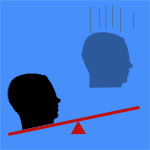 We are strongly motivated to promote the interests of anyone for whom we feel self-concern. We are moved to prevent that person’s suffering, to work towards his or her well-being. Motivation seems part of self-concern’s essential core.
A focus on motivation suggests that self-concern is primarily future-directed. We know we cannot change the past, and do not normally try. But of course, our attitudes towards the past, as well as the future, are infected with self-concern. Most events I remember in my own past are coloured by pride or shame, personal joy or pain. Most of my memories of my own life have associated emotions which are qualitatively distinct from my memories of other people’s lives, and of events to which I had no personal connection.
Our mental models of reality include both past and future. We imagine both (not always accurately). But the imagined past is labelled, in our models, as fixed, beyond help. The imagined future (and there are many) is flagged as possible. The past is manifest, fixed, immutable. The future is unmanifest, mutable, a realm of possibilities not actualities. The ‘flow of time’ might be described as the production of the actual from the possible. Continue reading “Self-Concern as Motive”