

Persons in Law

We cannot understand the self by examining people in isolation.   Too many important aspects of personhood only appear in a social context.

Thomas Metzinger’s work describes the self-model in which our ideas about ourselves are rooted.  The model is (usually) transparent, in that we operate through it without (usually) any awareness of a distinction between the model and the underlying reality.  It is a model to which we have a profound emotional attachment—most of us care, deeply, about ourselves in the past, present, and future.  As a result, our self-models are motivational.  They spur and shape our actions.  We evaluate possible courses of action by putting our self-models through various simulations, and responding emotionally to the different outcomes we imagine.  The research of Antonio Damasio has begun to show how our emotions must inform our executive decision-making processes in order for us to make what are commonly recognized as ‘rational’ decisions.

Most of what Metzinger and Damasio have to say about the self is as true of isolated individuals as of human beings immersed in society.  But a case can be made that the concept of the self could only have emerged in a social context.   I have argued that our concepts, particularly the entities recognized by our ontology, reflect what is important to us. The spatio-temporal boundaries between ‘things’ are artificial, not natural; they do not exist in nature, but are imposed upon nature by human beings.   A person is an entity whose boundaries roughly coincide with those of a human biological organism.  A person is commonly considered to begin sometime around birth; sooner in some traditions, later in others.  The person is usually thought to persist until biological death; but many people believe that it continues much longer than that; and some believe that if the organism is sufficiently damaged, then the person may cease to exist before its organism dies.

Among other things, a person is a unit of moral and legal responsibility—a bearer of enduring rights and privileges, duties and obligations, merits and demerits, assets and liabilities, debts and credits.  Those attributes of individual persons result from, and depend on, the fact that individuals are members of a larger society.  If a human being is isolated for a long time from other human beings, legal obligation disappears from his life, and moral obligation, if it does not entirely disappear, is vastly curtailed.  I would not go so far as to say that an isolated human being ceases to be a person; only that certain central and important aspects of personhood simply disappear from his or her life.  Having moral and legal rights and obligations is a central and important aspect of personhood. Continue reading “Persons in Law”

The Neurology of Anticipation

In the previous post, I asked what is the difference between having a painful experience myself and feeling sympathy for someone else’s pain.  The answer seems pretty clear.  My experience of my own pain is neurologically ‘hard-wired’, but there is no direct neural connection between other persons and myself which exposes me to their pain.  Things could have been different.  If we, like the Na’vi of the movie Avatar, had the physiological equivalent of USB-ports which allowed us to connect our nervous systems at will, then we could experience the pains, pleasures, and other sensations of other people while we were connected to them.  The ‘privacy’ of our minds is an anatomical limitation, not a metaphysical necessity.

A parallel question can be asked about future experience.  What is the difference between anticipating my own pain and having sympathy for a friend whose pain I can foresee?  As in the case of present pain, there is a vivid difference in my experience between anticipating having pain, and expecting you to have pain.   There is nothing resembling a direct neural connection between myself, now, and myself in the future, to explain this difference.  Nevertheless, neuroscience can help us understand it: why it is so vivid, why expectation of my own pain makes me anxious rather than just sympathetically concerned, why foreseeing pain in my own future feels like an unavoidable problem for me in a way that foreseeing your pain does not.

Another difference is that sympathy for others, unlike self-concern, seems at least partially under conscious control.  When we feel we cannot afford it, we tend to dial it down or switch it off altogether.  It feels optional, in contrast to the sense of unavoidability that clings to self-concern.

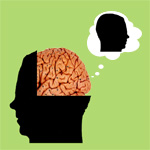
In his book, Hardwired Behaviour, Laurence Tancredi of the New York University School of Medicine offers some clues to an answer from a neurological perspective.  The engine of self-concern is a cyclical interaction between the limbic system, which generates our emotions (giving emotional ‘meaning’ to experience), and the prefrontal cortex, which makes plans and decisions. Continue reading “The Neurology of Anticipation”

Life Insurance as Game Changer

Who would have predicted that boring old life insurance would become the ‘killer app’ that makes human replication technology truly transformational?  But that does seem to follow from the logic of the situation.

The arguments for information-based life insurance are even more compelling than the arguments for teleportation.  The advantages of travelling as information are speed, convenience, cost, and sustainability (in the form of lower carbon emissions).  The final product is the same as conventional travel – the customer is (to all intents and purposes) transported from place A to place B.  But in the case of life insurance, the product is radically transformed.  Whereas traditional insurance merely mitigates the damage of death by providing monetary support to surviving family, the new insurance warrants the life of the policyholder by – in the event of his death – restoring him from a backup file.   It changes our relationship to death, which is no small matter. Continue reading “Life Insurance as Game Changer”