Parfit’s Retreat: “We Are Not Human Beings”

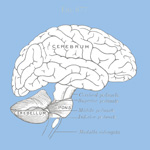
In a new paper, “We Are Not Human Beings,” Derek Parfit argues that persons are identically their conscious, thinking parts, which he identifies as their cerebrums.  This is a significant departure from the position he defended in Reasons and Persons, that personal identity consists in non-branching psychological continuity and connectedness with any cause:

Our identity over time just involves (a) Relation R—psychological connectedness and/or psychological continuity, either with the normal cause or with any cause, provided (b) that there is no different person who is R-related to us as we once were. [Parfit, 1984, p 216]

I call Parfit’s new view a “retreat” because it is a move away from the radical insights about what we are which illuminated Reasons and Persons, to a ‘conservative’ account of persons as physical substances. I find the move puzzling, because I can’t see that Parfit is compelled to make it, and disappointing, because it raises once again the fog of mysteries about persons that looked well on their way to being dispelled.

Parfit’s claim that persons are their cerebrums has as a direct consequence that persons cannot survive information-based teleportation. If  I plan to be teleported to Mars, I should accept that my replica on Mars will not be me, because my replica’s cerebrum is numerically different from my cerebrum. The cerebrum is a body part, which, like any other ordinary material object, ceases to exist when it is destroyed. Its replica on Mars is a different cerebrum—hence, if Parfit is right, a different person.

Parfit has long thought that survival—a person’s continued existence—is different from what matters in survival. His new view on what persons are could perhaps coexist with his earlier position that information-based teleportation preserves everything that matters in survival. But such coexistence, I will argue, is an uneasy truce between fundamentally warring ideas. An alternative account of what persons are—informational entities—is a better fit to Parfit’s intuition (which I endorse) that nothing important need be lost in teleportation of persons.

“Why We Are Not Human Beings” is Parfit’s response to animalism—the view put forward by Eric Olson and others that persons are identical to animals, or biological organisms. (In the animalist literature, “human being” is used as a synonym for “human animal.”) In this review of Parfit’s paper, I raise the following points:

  1. The arguments Parfit brings to bear against animalism rely on an intuition that has equal force against the paper’s conclusion that persons are their cerebrums.
  2. The claim that persons are their brains was strongly rejected in Reasons and Persons for reasons that supported a central argument of that book. If we were identical to our cerebrums, Parfit’s main argument against the Self-Interest Theory would be undercut in the same way that it would be if we were identical to our (whole) brains.
  3. The claim that we are our cerebrums weakens Parfit’s argument in Reasons and Persons that “ordinary survival is about as bad as being destroyed and having a Replica.” If I am my cerebrum, it is hard to believe that destruction of my cerebrum is not especially bad for me, even if a replica of my cerebrum is manufactured in its stead. Continue reading “Parfit’s Retreat: “We Are Not Human Beings””
Kolak: I Am You

People who think deeply about the puzzle cases of personal identity have come up with a variety of bold and radical responses. Like Alexander hacking through the Gordian knot, Parfit wielded an analytical scalpel to divide personal identity from what matters in personal survival, reaching the conclusion that ordinary survival is about as bad as being destroyed and replaced by a replica. Robert Nozick was so impressed by the difficulties posed by fission cases that he decided personal identity must depend on extrinsic factors: you are identical to whatever person is your closest continuer at any future time, a thesis with the odd consequence that, if your closest continuer after fission dies, you may suddenly find yourself being someone who until that time was someone else, your second-closest continuer. David Lewis’ solution to was to abandon the tried-and-true principle that persons can be counted by counting heads. Since there are two persons after fission, there were two all along, even though, before fission, they occupied the same body and were unaware of their duality. (Bizarre though it sounds, I support Lewis’ solution as one that inflicts the least damage to the traditional concept of a person.) Thomas Metzinger’s analysis led him to conclude that “no such things as selves exist in the world.”

In his book, I am You, Daniel Kolak offers yet another radical theory of personal identity: There is only one person, and that person is all of us.  What are commonly understood to be boundaries between individuals, he says, do not “merit the metaphysical significance ordinarily accorded to them.”

Our borders do not signify boundaries between persons. We are all the same person. [Kolak, 2010, p 1] Continue reading “Kolak: I Am You”

The Neurology of Anticipation

In the previous post, I asked what is the difference between having a painful experience myself and feeling sympathy for someone else’s pain.  The answer seems pretty clear.  My experience of my own pain is neurologically ‘hard-wired’, but there is no direct neural connection between other persons and myself which exposes me to their pain.  Things could have been different.  If we, like the Na’vi of the movie Avatar, had the physiological equivalent of USB-ports which allowed us to connect our nervous systems at will, then we could experience the pains, pleasures, and other sensations of other people while we were connected to them.  The ‘privacy’ of our minds is an anatomical limitation, not a metaphysical necessity.

A parallel question can be asked about future experience.  What is the difference between anticipating my own pain and having sympathy for a friend whose pain I can foresee?  As in the case of present pain, there is a vivid difference in my experience between anticipating having pain, and expecting you to have pain.   There is nothing resembling a direct neural connection between myself, now, and myself in the future, to explain this difference.  Nevertheless, neuroscience can help us understand it: why it is so vivid, why expectation of my own pain makes me anxious rather than just sympathetically concerned, why foreseeing pain in my own future feels like an unavoidable problem for me in a way that foreseeing your pain does not.

Another difference is that sympathy for others, unlike self-concern, seems at least partially under conscious control.  When we feel we cannot afford it, we tend to dial it down or switch it off altogether.  It feels optional, in contrast to the sense of unavoidability that clings to self-concern.

In his book, Hardwired Behaviour, Laurence Tancredi of the New York University School of Medicine offers some clues to an answer from a neurological perspective.  The engine of self-concern is a cyclical interaction between the limbic system, which generates our emotions (giving emotional ‘meaning’ to experience), and the prefrontal cortex, which makes plans and decisions. Continue reading “The Neurology of Anticipation”

Lessons of Human Fusion

The story of Jerry and May (“Coed”) should give pause to anyone who invests all his or her self-concern in psychological continuity and connectedness.

To summarize the plot: Jerry, a 40-year-old neuroscientist, is diagnosed with devastating rapid-onset dementia, a prospect which he regards as equivalent to death.  To save himself, he hits on the plan of copying his psychological attributes to the brain of a graduate student, a young woman named May.  The copying process ‘reads’ his brain-states and ‘writes’ them to her brain, effectively reproducing his memories, abilities, personality, and other psychological dispositions.

Sticklers would regard this as a breach of academic ethics.  But Jerry, although manifestly self-centred, is not without a conscience.  The process he employs does not damage May’s psychology; instead, it takes advantage of redundant capacity in her brain to add his psychological attributes to her own.

Before the mental merger takes place, Jerry sees transference of his psychological attributes to May as a way to escape the fate of his disease.   He anticipates having a future in May’s body, which he expects to share with May herself.

The procedure works according to plan.  When they wake up, the personalities of both May and Jerry are recognizably present in May’s body.  All is not smooth sailing – May and Jerry find themselves in competition for motor control of a single body.  In order to act effectively, they must cooperate.  Sometimes the best way is for one to sit back passively and ‘let the other drive.’

But it is not an equal relationship – Jerry is at a distinct disadvantage.  May is at home in her body, and perfectly competent to manage it, but Jerry finds it foreign and difficult.  When he planned his transformation, he failed to anticipate the full impact of the physical dissimilarity it entailed: the sex change, the reduced physical stature, the girlish voice, loss of the gravitas that society concedes to the mature.  With May’s body, Jerry is more awkward than a pubescent teen. Continue reading “Lessons of Human Fusion”

The Anatomy of Self-Concern


Published in 1998, Raymond Martin’s Self-Concern set a new direction for the philosophical discussion of personal identity by shifting the focus from “the normative question of whether this or that should matter in survival to the largely descriptive question of what…actually does…matter.”  Martin questions the philosophical goal of trying to show that we all should (rationally) respond in the same way to the puzzle cases – a goal shared by Parfit and his opponents – calling the attempt “survival-value imperialism.”  In examining how people actually value their own survival, his book goes a long way towards characterizing the conditions that make it difficult or easy for people to self-identify across time.  It is largely about the psychology of self-concern. Continue reading “The Anatomy of Self-Concern”

The Plastic Self

Neurologists have demonstrated plasticity in the spatial sense of self, or body-image.  Not only are the ‘phantom limbs’ of amputees somewhat malleable, under special circumstances (and also remarkably intractable under others), but we can be induced to perceive a detached rubber hand, lying on a table, as our own hand, and even to feel that the table-top itself is part of our own body.  But how plastic, if at all, are our ideas of ourselves extended into the future and the past?

Published in 1970, Bernard Williams’ “The Self and the Future” is one of the seminal papers that gave rise to the contemporary philosophical debate on personal identity.   Williams presents two series of thought-experiments, which lead his own intuitions in opposite directions on the question whether a future person, described as having a certain relationship to his present self, would be himself or someone else.  One set of cases tends to persuade him that what matters in personal identity – the relation that makes us the same person over time – is psychological continuity.  The other set of cases makes him think that bodily continuity is more important.  Williams reports being left “not in the least clear” which is right.

Williams presents this as a philosophical problem.  I suggest it is more fruitfully regarded as an experimental result – a single data-point in a psychological experiment, with Williams as both subject and experimenter.  If repeated with a larger, and less contaminated, sample population, such an experiment could shed the light of empirical research on the question with which I opened this post.  I hope someone will undertake such a study, which could lead in interesting directions. Continue reading “The Plastic Self”

Life Insurance as Game Changer

Who would have predicted that boring old life insurance would become the ‘killer app’ that makes human replication technology truly transformational?  But that does seem to follow from the logic of the situation.

The arguments for information-based life insurance are even more compelling than the arguments for teleportation.  The advantages of travelling as information are speed, convenience, cost, and sustainability (in the form of lower carbon emissions).  The final product is the same as conventional travel – the customer is (to all intents and purposes) transported from place A to place B.  But in the case of life insurance, the product is radically transformed.  Whereas traditional insurance merely mitigates the damage of death by providing monetary support to surviving family, the new insurance warrants the life of the policyholder by – in the event of his death – restoring him from a backup file.   It changes our relationship to death, which is no small matter. Continue reading “Life Insurance as Game Changer”

What We Are Not

What We Are NotWe are not Cartesian egos.  We are not biological organisms either.


Not Cartesian egos

A Cartesian ego is a kind of mental or spiritual thing that is thought to inhabit a human body and give it life.  Many people believe we can exist independently of a human body – that we survive the death of our bodies, continuing to have experiences either without a body, or by being reborn in another body.

I hardly need to argue against Cartesian egos.  The idea is in widespread disrepute without any assistance from me.  It is hard to reconcile with a scientific view of the world.  We have no convincing evidence that such things exist.  Until we have, we should use Occam’s Razor for its intended purpose to prune them from our conceptual scheme.  Leaving them in creates clutter and awkward problems.

One problem comes from split brain research.  When the corpus callosum connecting a patient’s two cerebral hemispheres is cut, two centres of consciousness appear where there was one before.  Should we conclude that the surgeon’s knife divided a spiritual substance?   Instead of deepening our understanding, this multiplies mysteries.

Despite its academic unrespectability, the idea that we are Cartesian egos is embraced by billions of people.  It is deeply involved with emotion, as this passage from Umberto Eco’s novel The Mysterious Flame of Queen Loana illustrates:

One evening the spiritual director stood in front of the altar balustrade, illuminated – like all of us, like the entire chapel – by that single candle that haloed him in light, leaving his face in darkness.  Before dismissing us, he told us a story.  One night, in a convent school, a girl died, a young, pious, beautiful girl.  The next morning, she was stretched out on a catafalque in the nave of the church, and the mourners were reciting their prayers for the deceased, when all of a sudden the corpse sat up, eyes wide and finger pointing at the celebrant, and said in a cavernous voice, “Father, do not pray for me!  Last night I had an impure thought, a single thought – and now I am damned!” Continue reading “What We Are Not”

The Self Illusion

Vase-faces2

To find the right answers, ask the right questions.  I have skated around the question, “Is there a rational justification for self concern?” without coming up with a solid argument that settles it one way or the other.  But there is a related question which can be answered.

Two Views of Teleportation

As we have seen, teleportation by means of information transfer can be viewed in two ways.  The facts of the case are: I am scanned in North Vancouver and my information is sent to Omaha, where it is used to construct a living replica of me.  Meanwhile, the original in North Vancouver is destroyed.  Two views of these events are:

SURVIVE: I am transported from North Vancouver to Omaha.

DIE: I am killed in North Vancouver, and someone else – my replica – is constructed in Omaha.

People who think about teleportation disagree about whether SURVIVE or DIE is an accurate description of the case.  How can it be settled which view is true – or whether neither is true?

People who disagree about SURVIVE and DIE do not disagree about the facts of the case.  The facts are not in question.  No scientific experiment can be devised to settle which of SURVIVE and DIE is an accurate description of the facts. Continue reading “The Self Illusion”

Gappy Things That Branch and Change

IdentityImagine, in the early days of books, a small library consisting entirely of original manuscripts.  Some of them are very old, and have been attacked by mice.  Some have deteriorated so much that their pages crumble to dust when the custodian of the library tries to read them.  He mourns the loss of these books, and contemplates the inevitable decay of the remaining books with sorrow.  To be sure, new manuscripts are occasionally added to the library, but they cannot replace the volumes that are lost forever.  This goes on until, one day, the young assistant librarian has an idea.  “This book will be unreadable in five years,” he tells his elder.  “But I can read it now.  If I copy the words of this book onto sheets of new vellum, and bind them in a strong new binding, we will be able to read it for many decades to come.”  The old librarian tenderly strokes the cracked spine of the crumbling volume, and shakes his head.  “What good is a copy?  It wouldn’t be the same book.”

In the previous post, I summarized one of Derek Parfit’s main arguments that personal identity – being the same person over time – is not what matters in survival.

Human fission – one person ‘splitting’ into two – is clearly imaginable.  It is physically possible, and is not far from being technically possible.  Parfit argues compellingly that fission would preserve what is important in survival.  Specifically, if Parfit knew that both of his cerebral hemispheres were about to be separately transplanted into two separate bodies, he would have the same rational justification for anticipating the experiences of both of the post-op survivors as each of us has for anticipating his or her own future experiences.  This, despite the fact that the original Derek Parfit ceased to exist when he was divided.  In this case, ceasing to exist is very unlike ordinary death.  Ceasing to exist just consists in the fact that the two post-op survivors are different persons from one another, and neither one is the same person as the pre-op Derek Parfit.  Loss of identity of this kind does not matter. Continue reading “Gappy Things That Branch and Change”